Unique spherical houses in the Netherlands: how an architectural experiment became homes for four decades
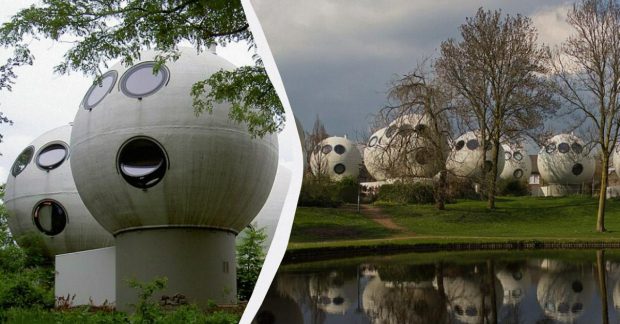
More than forty years ago, the Dutch city of 's-Hertogenbosch built 50 spherical houses that still serve as homes for locals today.
 👥Society
Photo: UNIAN
Key points
- In 1984, 50 Bolwoningen spherical houses were built in the Netherlands.
- The project's architect was Dries Kreijkamp, who aimed to create affordable and ergonomic housing.
- The structure is made of fiberglass on a concrete base and designed primarily for single occupants or couples.
- Despite production challenges, the houses remain inhabited and serve as a famous architectural landmark.
In 1984, the Dutch housing stock expanded with an unusual experimental district: 50 white sphere-shaped houses known as Bolwoningen were built in the city of 's-Hertogenbosch. Architect Dries Kreijkamp proposed this project as a response to the severe housing crisis caused by rapid population growth in previous decades. The authorities aimed to find affordable and unconventional solutions that stood out from endless rows of identical neighborhoods.
The structure of each dwelling consists of a cylindrical concrete base and a lightweight spherical superstructure with a diameter of 5.5 meters, made of fiberglass. The total area of such a house is about 55 square meters, but due to the curved shape, the actual usable living space is approximately 25 square meters. The interior is divided into several levels connected by spiral stairs: a bedroom on the ground level, a bathroom in the middle, and a small living room with a kitchen at the top.
Architectural challenge and current state
Despite the original concept and good natural lighting provided by round windows, mass production of such structures turned out to be too complex and expensive. Curved walls created certain domestic challenges, particularly when placing furniture or hanging artwork. As a result, the architect's ambitious plans to scale up the project fell through, and the experiment remained limited to just fifty completed buildings.
Today, these futuristic structures by the canal not only serve their residential function but also attract numerous tourists. They demonstrate how unconventional urban planning ideas from the past can stand the test of time and harmoniously integrate into the urban environment, remaining a unique architectural landmark.
Source UNIAN — unian.ua/curiosities/budinki-kuli-v-niderlandah-navishcho-u-1984-ro… ↗
Read next
 🏙️City
How to use a melamine sponge safely: Cleaning tips and risks
Melamine sponges effectively remove tough stains without harsh chemicals, but their abrasive nature can easily ruin delicate household surfaces.
 🛡️Security
Poland Demands NATO Strengthen Air Defense After Russian Missile Breach
Polish Deputy Defense Minister Pawel Zalewski stated that NATO must reinforce air defense along its eastern flank following a violation of Polish airspace by Russian miss…
 💡Tech
Scientists propose sending thermonuclear reactors into space
Researchers suggest placing nuclear fusion reactors in orbit to power future space missions and extraterrestrial settlements.
 🇺🇦Ukraine
Poland reports Russian disinformation wave over alleged Kaliningrad region attack
Polish and Lithuanian authorities have reported a massive wave of Russian fake news regarding a purported Ukrainian and NATO attack on the Kaliningrad region.
 🛡️Security
Massive Energy Strikes: Dnipro and Odesa Face Critical Power Outages
Fresh attacks on Ukraine's critical infrastructure have left major cities without electricity, halting public transport and affecting basic services.
 🚌Transport
Russian forces attack Naftogaz facilities in Dnipropetrovsk and Zaporizhzhia regions
Energy sector employees were injured following airstrikes on gas infrastructure and filling stations.